

Collaborative Divorce in Omaha & Lincoln
A Private, Structured Alternative to Court

Choose a McGill Law collaborative divorce attorney and discover how the collaborative divorce process empowers you and your family to resolve legal disputes without judges, magistrates or court personnel making decisions for you.
McGill Law has consistently handled more collaborative divorce cases than any other firm in the city of Omaha and in the state of Nebraska. Collaborative divorce is a problem-solving approach that can minimize the impact of conflict on you, your children, family and life.

You will be supported by professionals with the right expertise to guide and inform you along the way. The results are legally binding agreements that resolve the issues facing your family. With the information and guidance you need, you are empowered to make the sound, long-lasting decisions that will impact you and your family for years to come. The Collaborative process preserves your privacy and your dignity while giving you the best possible chance at resolving your disputes respectfully.
Our collaborative attorneys are active members of collaborative practice communities in Nebraska, Iowa, and internationally, including the International Academy of Collaborative Professionals. We are committed to maintaining the highest standards in structured, out-of-court divorce resolution.
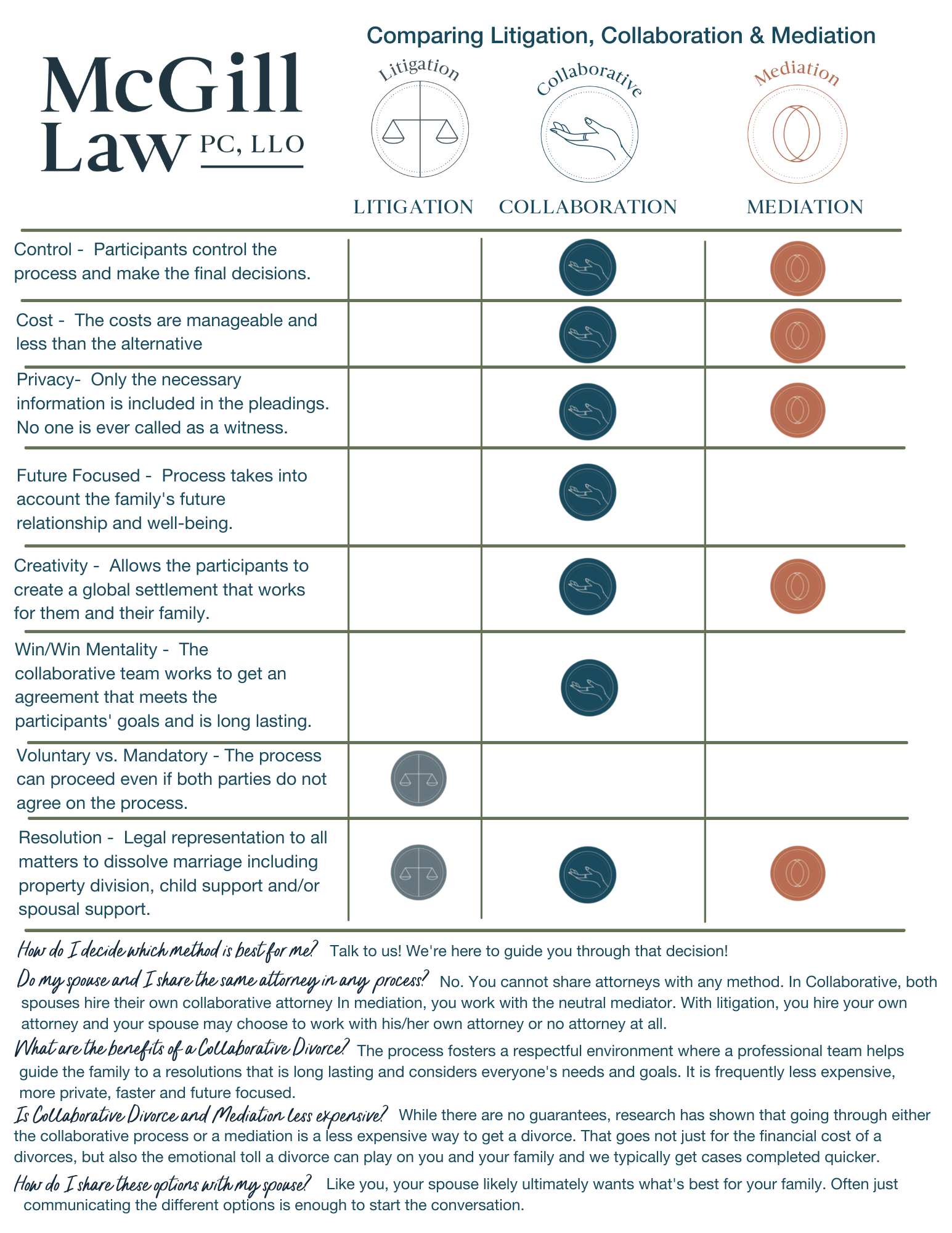
Comparing Divorce Processes
We love collaborative law. But sometimes, that’s not the best option for a family. If collaborative law won’t work for you, contact us and we’ll connect you with one of our mediation or litigation specialists to help guide you through a different divorce model.
Collaborative Divorce FAQs
Collaborative divorce is a private, out-of-court process where both spouses work with specially trained attorneys and, when appropriate, neutral professionals to reach agreements without litigation. The goal is resolution without courtroom conflict.
Yes. Collaborative divorce services are available in both Omaha and Lincoln. Couples can choose a structured, team-based approach focused on resolution and long-term stability.
Collaborative divorce is often more cost-effective than traditional litigation because it reduces court appearances and adversarial procedures. Costs depend on complexity and the professionals involved.
The timeline depends on the complexity of the case and how quickly both parties exchange information and reach agreements. Because it is an out-of-court process, the schedule is more flexible than traditional litigation.
The collaborative process is designed to avoid contested court hearings. Once agreements are finalized, documents are submitted to the court for approval.
If the process ends without full agreement, both collaborative attorneys withdraw, and each spouse may retain new litigation counsel. This structure encourages full participation in good faith.
Meet Our Collaboratively Trained Attorneys

Jodie McGill is a collaboratively trained family law attorney and founder of McGill Law. She has helped countless families throughout Nebraska and Iowa navigate divorce outside of the courtroom through the collaborative process.

Theresa Loughran is a collaboratively trained family law attorney and partner at McGill Law. She works closely with clients and collaborative professionals to help families reach durable agreements that support their goals and future relationships.
Together, Jodie and Theresa have extensive experience helping families resolve divorce through the collaborative process.
Not sure whether collaborative divorce is right for your family? A consultation can help you understand your options and determine whether this process is a good fit.