
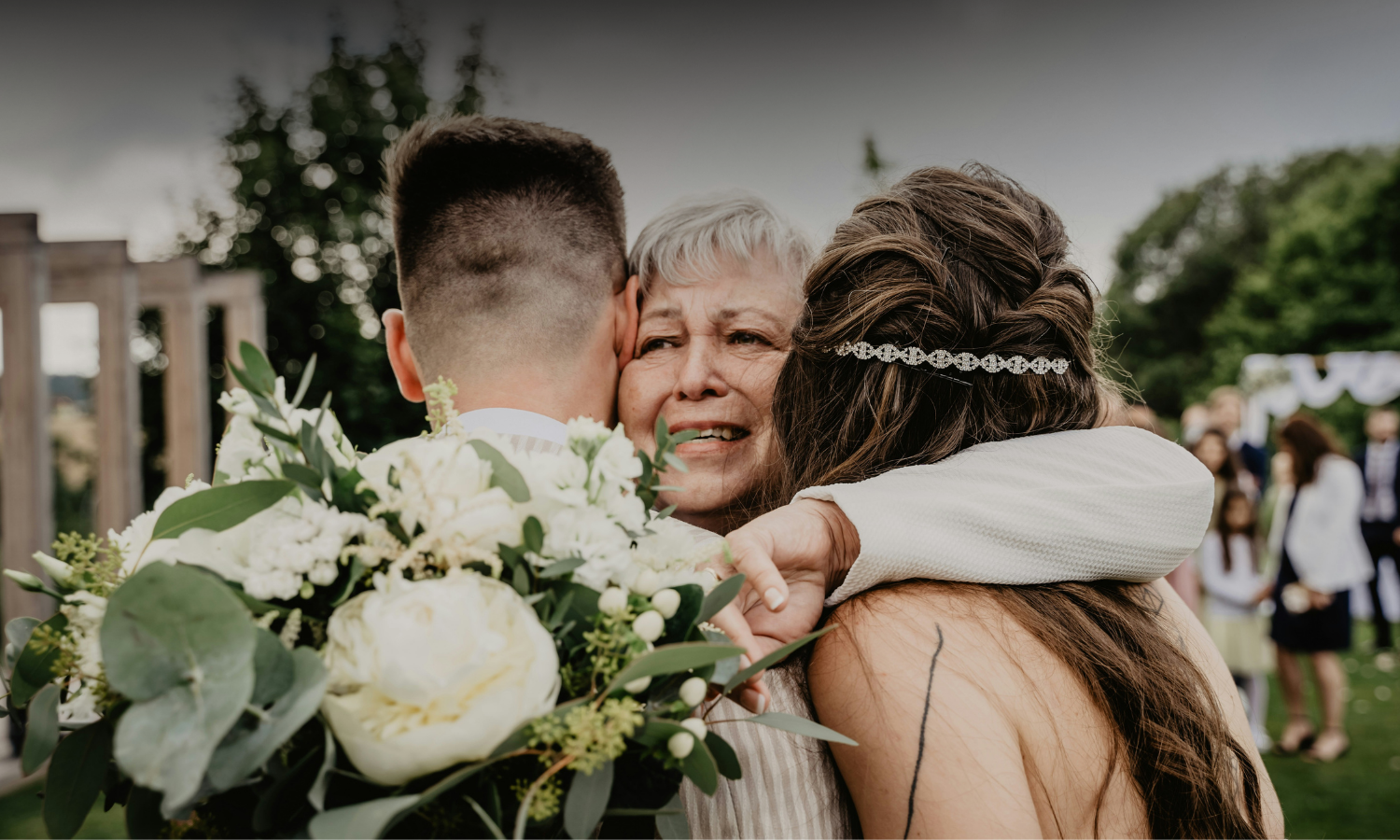
A child’s wedding can bring emotions that catch divorced parents by surprise.
Whether the divorce happened recently or decades ago, there is something about a wedding that has a way of bringing family relationships into focus.
It may happen when the music starts. When the doors open. When your child steps into view.
For a moment, time seems to collapse.
You’re looking at the person standing before you, and somehow also seeing every version of them that came before.
Every stage of their life feels present at once.
A child’s wedding can bring joy, pride, excitement, and hope. It can also bring reflection. Memories of the life you once imagined. Gratitude for the years spent raising your child. Recognition of how much has changed, and how much has remained the same.
Because whatever happened between you and your former spouse, the two of you helped bring this person into the world. Together, in ways large and small, you helped them become the person standing before family and friends on one of the most important days of their life.
When Divorce and a Wedding Collide
Weddings are one of the few occasions that bring together different chapters of a family’s story. Parents, stepparents, siblings, grandparents, partners, in laws, and friends may all find themselves gathered in the same place, united by their love for the couple.
For divorced parents, that can feel joyful, complicated, or both.
Questions about family photographs, ceremony roles, seating arrangements, who pays for what, and new relationships can carry more emotional weight than they appear to on the surface.
Even when a divorce happened years ago, a child’s wedding can remind us where we’ve been while asking us to focus on where we are now.
Most couples are not expecting perfection from the people around them. What they often hope for is something much simpler: support, flexibility, and the freedom to enjoy the day without feeling responsible for everyone else’s emotions.
Put Your Child at the Center of the Day
Divorce can leave behind a long history.
There may have been disagreements about parenting, finances, holidays, schedules, or decisions made along the way. Even after years have passed, it can be easy to view wedding plans through the lens of old frustrations.
Who was asked first?
Who is sitting where?
Who is paying for what?
Who is included in certain photographs?
Those questions may feel important in the moment, but they rarely tell the whole story.
A wedding is not a continuation of the divorce. It is not an opportunity to revisit old grievances or measure who mattered more.
It is a celebration centered on your child, their partner, and the future they are building together.
Keeping the couple at the center can make some of those emotionally charged decisions feel a little less important.
Making Room for Stepparents and Blended Families
Many weddings today include blended families.
A parent may attend with a new spouse or partner. A stepparent may be included in family photographs. Long term partners, in laws, siblings, and chosen family members may all play important roles in the celebration.
For some parents, these moments feel natural. For others, they can be unexpectedly emotional.
Families change over time. The people who love and support our children often change too.
Making room for those relationships does not diminish the role of a parent. More often, it reflects the reality that a child can be loved and supported by many people throughout their life.
It’s Okay if the Day Feels Complicated
Happiness and sadness are not mutually exclusive.
You can feel enormous pride in your child while remembering the family you once imagined. You can be genuinely happy for the couple while feeling the loss of an earlier chapter of your own life.
A wedding can bring those feelings to the surface in unexpected ways.
The goal does not have to be pretending those emotions do not exist. It can simply be recognizing that they belong to you, not to your child to manage on their wedding day.
Think Beyond the Wedding Day
A wedding lasts a day, but the family relationships surrounding it often last much longer.
For many divorced parents, a wedding is one of the first major occasions that requires everyone to come together as adults. It can also set the tone for future gatherings.
There may be anniversaries, holidays, birthday parties, graduations and, someday, grandchildren.
That does not mean former spouses need to become friends or forget the history between them. It simply means there may be many more important days when both parents will want to be present.
How everyone shows up for this one can matter long after the last guest leaves.
The Moment You’ll Remember
Years from now, most parents will not remember every detail of the reception timeline or where everyone sat during dinner.
They will remember seeing their child smile.
They will remember the vows, the laughter, the music, and the feeling of being present for a day that mattered deeply to someone they love.
Weddings after divorce can bring complicated emotions. They can also provide a rare opportunity to step back and see the bigger picture.
Whatever happened between you and your former spouse, the wedding is evidence of something you accomplished together: raising a child who is ready to build a life of their own.
For a few hours, the history that divides a family may matter a little less than the person who connects it.
The seating charts, family photographs, and wedding day logistics will eventually be forgotten. What remains are the memories of seeing your child surrounded by the people who love them and stepping confidently into the future they have chosen.
And perhaps that is one of the quiet gifts a wedding can offer divorced parents: a reminder that even after loss, disappointment, and change, there can still be moments that bring a family together.
Have questions about divorce or family law? Our attorneys work with individuals and families throughout Nebraska and Western Iowa. Schedule a Consultation.